Resources
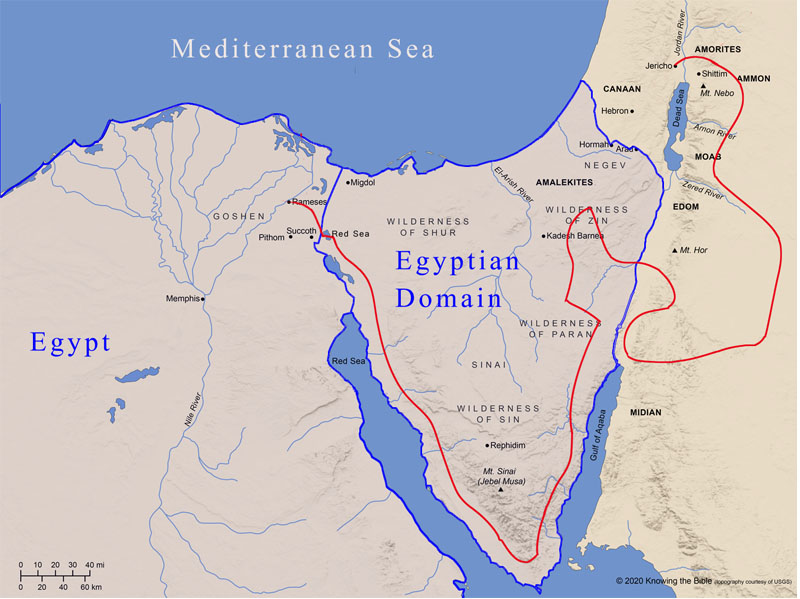
Israelite Journeys
Rameses
Succoth
Etham
Pi-hahiroth
By the Red Sea
Wilderness of Etham
Marah
Elim
By the Red Sea
Wilderness of Sin
Dophkah
Alush
Rephidim
Wilderness of Sinai
Kibroth-hattaavah
Hazeroth
Rithmah
Rimmon-perez
Libnah
Rissah
Kehelathah
Mount Shepher
Haradah
Makheloth
Tahath
Terah
Mithkah
Hashmonah
Moseroth
Bene-jaakan
Hor-haggidgad
Jotbathah
Abronah
Ezion-geber
Kadesh
Mount Hor
Zalmonah
Punon
Oboth
Iye-abarim
Dibon-gad
Almon-diblathaim
Abarim
Moab
Beth-jeshimoth
Abel-shittim
This Bible study utilizes the Berean Standard Bible because it is in the public domain and, therefore, free to use without copyright restrictions. Modern translations, including this one, frequently use terms like "defiling disease" or "skin disease" instead of "leprosy" to translate the Hebrew word tsara'at. This change is made because tsara'at describes a broad range of skin conditions—such as eczema, psoriasis, blemishes, and rashes—rather than just the specific infectious disease known today as Hansen's disease (leprosy). Furthermore, tsara'at in the Bible applies to more than just human skin; it also refers to mold or mildew found on clothing and walls. It was considered a state of ritual impurity requiring social isolation to maintain community holiness, rather than just a medical ailment.
Any one who was suspected of having any of these diseases was set apart from society for the purpose of observing. The law declared that the priest alone was to pronounce the patient clean or unclean. In ancient Israel, priests acted as public health inspectors, using a strict, divinely ordained, and systematic examination process to determine if a skin condition was leprosy (tzara'at) or just a common ailment.
The Oral Torah (Mishnah) included strict, detailed procedures to ensure accurate diagnosis. Inspections were prohibited from taking place on the Sabbath or during festivals, therefore was delayed until the following day. In addition, inspections were not permitted early in the morning, late in the evening, at noon, or on cloudy days, because the priest could not properly determine the color of the skin during these times. The priest was never himself to touch a man who was infected, lest he be not only contaminated but declared ceremonially unclean. The priest did not provide a cure, only God could cure a person of leprosy. The priest only confirmed if a person was healed and performed purification rituals to reintegrate them into society.
Leviticus 13:1 Then the LORD said to Moses and Aaron, "When someone has a swelling or rash or bright spot on his skin that may be an infectious skin disease, he must be brought to Aaron the priest or to one of his sons who is a priest.
Leviticus 13:3 The priest is to examine the infection on his skin, and if the hair in the infection has turned white and the sore appears to be deeper than the skin, it is a skin disease. After the priest examines him, he must pronounce him unclean.
Because the Israelites lived in close proximity, they implemented strict measures to prevent the spread of infections and ensure the community remained ritually pure. Aaron and his descendants were tasked with inspecting the physical and spiritual health of the people. Anyone with a skin issue—such as a swelling, boil, spot, or rash—was required to go to a priest for an evaluation.
Priests used hair color and texture within a sore as a primary diagnostic tool to determine ritual cleanliness, particularly regarding infectious skin diseases. Early detection and isolation was important to prevent the spread of potential contagion, maintain the ritual purity of the community, and protect the camp from defilement. Recent research has confirmed that human hair serves as a valuable, non-invasive diagnostic tool capable of detecting a wide range of diseases, nutritional deficiencies, and long-term health conditions.
Leviticus 13:4 If, however, the spot on his skin is white and does not appear to be deeper than the skin, and the hair in it has not turned white, the priest shall isolate the infected person for seven days. On the seventh day the priest is to reexamine him, and if he sees that the infection is unchanged and has not spread on the skin, the priest must isolate him for another seven days. The priest will examine him again on the seventh day, and if the sore has faded and has not spread on the skin, the priest shall pronounce him clean; it is a rash. The person must wash his clothes and be clean.
Leviticus 13:7 But if the rash spreads further on his skin after he has shown himself to the priest for his cleansing, he must present himself again to the priest. The priest will reexamine him, and if the rash has spread on the skin, the priest must pronounce him unclean; it is a skin disease.
The mention of a "white" spot suggests a need for careful examination, as it could be a sign of something more serious. If the infection appeared superficial, the priest would place the person in isolation for seven days to monitor for changes, and to allow time for healing. Even if a suspected person was found to be clean, they were still required to bathe and wash their clothes. Because individuals typically owned only one set of clothing, this purification requirement meant they could not appear in public while their clothes were being washed.
If the rash continues to spread after the person has been examined by the priest and has been pronounced clean, the infected person must return to be examined again. The spreading of the rash emphasizes the seriousness of the condition and could be an infectious skin disease, therefore he is declared unclean.
Leviticus 13:9 When anyone develops a skin disease, he must be brought to the priest. The priest will examine him, and if there is a white swelling on the skin that has turned the hair white, and there is raw flesh in the swelling, it is a chronic skin disease and the priest must pronounce him unclean. He need not isolate him, for he is unclean.
Raw flesh signifies an open sore, ulcer, or inflamed, reddish tissue within a white, swollen, or scabbed area, carried a risk of transmitting the disease via fluids. It indicates the disease is "deeper than the skin," distinguishing it from a superficial rash. If the raw flesh appears, the person was deemed unclean. While they were not temporarily isolated for observation, they were still considered unclean and would have to dwell outside the camp, as the goal was to keep the community and the sanctuary pure.
Leviticus 13:12 But if the skin disease breaks out all over his skin so that it covers all the skin of the infected person from head to foot, as far as the priest can see, the priest shall examine him, and if the disease has covered his entire body, he is to pronounce the infected person clean. Since it has all turned white, he is clean.
The complete, uniform, white covering signaled that the disease was no longer spreading. It was considered a non-infectious, dormant, or healed state. The individual was not considered dangerous to others so the person could be pronounced clean and was restored to society.
Leviticus 13:14 But whenever raw flesh appears on someone, he will be unclean. When the priest sees the raw flesh, he must pronounce him unclean. The raw flesh is unclean; it is a skin disease. But if the raw flesh changes and turns white, he must go to the priest. The priest will reexamine him, and if the infection has turned white, the priest is to pronounce the infected person clean; then he is clean.
Even if previously cleared, the emergence of "raw flesh" within a lesion meant the infection had returned, triggering an immediate, mandatory declaration of uncleanness. The true mark of leprosy is raw flesh. The law specified that if this raw flesh eventually healed and turned white again, the person could return to the priest and would be once again declared clean.
Leviticus 13:18 When a boil appears on someone's skin and it heals, and a white swelling or a reddish-white spot develops where the boil was, he must present himself to the priest. The priest shall examine it, and if it appears to be beneath the skin and the hair in it has turned white, the priest shall pronounce him unclean; it is a diseased infection that has broken out in the boil.
Boils are localized, inflamed, and often pus-filled skin swellings. The skin eruption was a common ailment that could indicate a more serious condition. The presence of a boil, required careful examination by a priest to determine if it was a sign of a more severe disease like leprosy. After it is healed, and a new problem arises – either a white swelling or a reddish-white spot appears in the same place, the priest is to carefully determine if the condition is serious in which case the individual is declared unclean.
Boils appear multiple times in the Bible, primarily as signs of divine judgment, testing, or disease. They are mentioned in the context of plagues on Egypt, the testing of Job, the illness of King Hezekiah, and as part of the Mosaic Law's regulations for ritual purity.
Leviticus 13:21 But when the priest examines it, if there is no white hair in it, and it is not beneath the skin and has faded, the priest shall isolate him for seven days. If it spreads any further on the skin, the priest must pronounce him unclean; it is an infection. But if the spot remains unchanged and does not spread, it is only the scar from the boil, and the priest shall pronounce him clean.
The priest looked for specific signs—such as white hair or depth below the skin—to distinguish a harmless rash from a serious, spreading infection, highlighting the need for careful discernment. The seven-day isolation allowed time for the condition to either heal or worsen, ensuring that decisions about cleanliness were based on evidence rather than immediate, harsh judgment.
Leviticus 13:24 When there is a burn on someone's skin and the raw area of the burn becomes reddish-white or white, the priest must examine it. If the hair in the spot has turned white and the spot appears to be deeper than the skin, it is a disease that has broken out in the burn. The priest must pronounce him unclean; it is a diseased infection.
If a healed burn develops a new, suspicious spot, the person must show it to a priest for inspection. Should the spot appear to be a deep, defiling disease, the priest is to pronounce the individual ritually unclean. Even a seemingly normal condition, like a burn, could lead to something more serious.
Leviticus 13:26 But if the priest examines it and there is no white hair in the spot, and it is not beneath the skin but has faded, the priest shall isolate him for seven days. On the seventh day the priest is to reexamine him, and if it has spread further on the skin, the priest must pronounce him unclean; it is a diseased infection. But if the spot is unchanged and has not spread on the skin but has faded, it is a swelling from the burn, and the priest is to pronounce him clean; for it is only the scar from the burn.
Rather than assuming the worst, a person with a questionable skin spot was separated for a week to ensure proper diagnosis. If a spot is uncertain, the priest isolates the individual for seven days, and if it spreads during that time, it is classified as an infection and the person spends another week in isolation and the process is repeated. Otherwise it is a scar and the person is declared clean.
Leviticus 13:29 If a man or woman has an infection on the head or chin, the priest shall examine the infection, and if it appears to be deeper than the skin and the hair in it is yellow and thin, the priest must pronounce him unclean; it is a scaly outbreak, an infectious disease of the head or chin.
Leviticus 13:31 But if the priest examines the scaly infection and it does not appear to be deeper than the skin, and there is no black hair in it, the priest shall isolate the infected person for seven days. On the seventh day the priest is to reexamine the infection, and if the scaly outbreak has not spread and there is no yellow hair in it, and it does not appear to be deeper than the skin, then the person must shave himself except for the scaly area. Then the priest shall isolate him for another seven days. On the seventh day the priest shall examine the scaly outbreak, and if it has not spread on the skin and does not appear to be deeper than the skin, the priest is to pronounce him clean. He must wash his clothes, and he will be clean.
Leviticus 13:35 If, however, the scaly outbreak spreads further on the skin after his cleansing, the priest is to examine him, and if the scaly outbreak has spread on the skin, the priest need not look for yellow hair; the person is unclean.
Leviticus 13:37 If, however, in his sight the scaly outbreak is unchanged and black hair has grown in it, then it has healed. He is clean, and the priest is to pronounce him clean.
Leviticus 13:38 When a man or a woman has white spots on the skin, the priest shall examine them, and if the spots are dull white, it is a harmless rash that has broken out on the skin; the person is clean.
Skin disorders that impacted the scalp or the beard were treated as any other infection. They were to have his head and beard shaved, leaving two hairs on each side of the infected area allowing the priest to easily monitor if the infection spreads or changes during the additional seven-day quarantine.
Leviticus 13:40 Now if a man loses his hair and is bald, he is still clean. Or if his hairline recedes and he is bald on his forehead, he is still clean. But if there is a reddish-white sore on the bald head or forehead, it is an infectious disease breaking out on it. The priest is to examine him, and if the swelling of the infection on his bald head or forehead is reddish-white like a skin disease, the man is diseased; he is unclean. The priest must pronounce him unclean because of the infection on his head.
A man who loses his hair naturally is ceremonially "clean," unlike someone with a skin disease or leprosy, which caused hair loss. On the other hand, intentional baldness (shaving for the dead) that was a sign of deep mourning, grief, or idolatrous rituals was forbidden.
Numbers 5:1 Then the LORD said to Moses, "Command the Israelites to send away from the camp anyone with a skin disease, anyone who has a bodily discharge, and anyone who is defiled by a dead body. You must send away male and female alike; send them outside the camp so they will not defile their camp, where I dwell among them."
An individual can be considered unclean from a disease, bodily discharge or from touching a dead body. Part of the purification process for those who become defiled by any of these conditions was to be sent outside the camp, emphasizing the separation between life and death, purity and impurity, and the need for cleansing to restore fellowship with God.
Leviticus 13:45 A diseased person must wear torn clothes and let his hair hang loose, and he must cover his mouth and cry out, 'Unclean, unclean!' As long as he has the infection, he remains unclean. He must live alone in a place outside the camp.
A person diagnosed with leprosy was regarded as "one dead" and touching one made a person unclean, similar to touching a corpse. Healing a leper was considered as difficult as raising a person from the dead. Jews understood leprosy as a punishment inflicted by God for sin rather than a disease arising from natural causes.
One who is declared unclean must identify himself by his or her appearance. Wearing torn clothes were common signs of mourning, although Jewish tradition exempted women from rending their clothes. His head was to be uncovered and free from any covering upon it, hat, or cap, or turban and was not to cut his hair.
He was to cover his upper lip, either, perhaps, with his hand, or with the skirt of his garment, partly for the preservation of others from his infectious breath or touch. He is to announce that he has been declared ritually unclean when he is around others, saying, "Unclean! Unclean!" as a warning for them to keep someone who is ritually clean at a distance from him and be contaminated and declared ritually unclean himself or herself. This cry was both a confession of their impurity and a plea for mercy.
He was to dwell outside of the camp, cut off from his friends and relations during the entire time of his being in the state of ritual uncleanness and apart from those who were clean. And so there is a loneliness for those who are in this situation of being ritually unclean.
Numbers 5:4 So the Israelites did this, sending such people outside the camp. They did just as the LORD had instructed Moses.