Resources
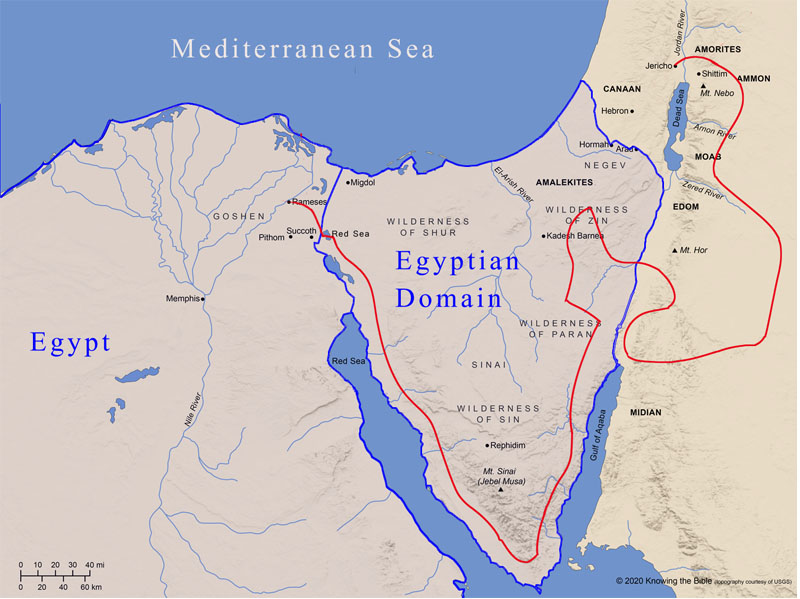
Israelite Journeys
Rameses
Succoth
Etham
Pi-hahiroth
By the Red Sea
Wilderness of Etham
Marah
Elim
By the Red Sea
Wilderness of Sin
Dophkah
Alush
Rephidim
Wilderness of Sinai
Kibroth-hattaavah
Hazeroth
Rithmah
Rimmon-perez
Libnah
Rissah
Kehelathah
Mount Shepher
Haradah
Makheloth
Tahath
Terah
Mithkah
Hashmonah
Moseroth
Bene-jaakan
Hor-haggidgad
Jotbathah
Abronah
Ezion-geber
Kadesh
Mount Hor
Zalmonah
Punon
Oboth
Iye-abarim
Dibon-gad
Almon-diblathaim
Abarim
Moab
Beth-jeshimoth
Abel-shittim
The threefold degree of holiness among the Israelites corresponds to the specific layout of the tabernacle and prescribed the way for man to approach God. The people who were a nation chosen by God to be His Holy people, the priests who were the holy of holies and the high priests who were the most holy. Chapters 11-20 focused on the law as it related to the people. These chapters relate to the holiness and property conduct of the priests.
Numbers 17:13 Anyone who comes near to the tabernacle of the Lord will die.
God cannot be in the presence of sin, for where He dwells, no unclean thing can enter in. Aaron and his sons reflected His holiness and authority. They formed a line of protection around the tabernacle against death by the wrath of God. They were an intercessor between God and the Israelites. They had to maintain high moral standards in order to carry out the duties of the priesthood.
Since the priests came near the holiness of God all the time, they risk violating ritual laws more than any of the others. They had greater restrictions on their conduct and a greater amount of responsibility. They had to be free from defilement or defects much like the animals used in sacrifices.
Leviticus 21:1-3 Then the LORD said to Moses, "Speak to Aaron's sons, the priests, and tell them that a priest is not to defile himself for a dead person among his people, except for his immediate family—his mother, father, son, daughter, or brother, or his unmarried sister who is near to him, since she has no husband. He is not to defile himself for those related to him by marriage, and so profane himself.
Death is a penalty of sin, therefore, physical contact with the dead brings defilement. The word "defile" refers to making someone ceremonially unclean and therefore unfit for religious use or association with God. It refers to ritual impurity, not just physical dirtiness. Unclean individuals were not allowed to enter the tabernacle or participate in holy ceremonies until purification rituals were performed and then they could not participate in religious activities for seven days. Priests entered into the tabernacle daily to perform their tasks so they had to avoid becoming unfit for duty. As long as he was performing his duties in the tabernacle and wore the priestly garments, he was still not allowed to become defiled.
A married daughter no longer belongs to the parents but to her husband. Therefore she is no longer an immediate family member. By the same token, mother-in-laws, sons-in-law, etc. are also not considered blood related family members. Other restrictions are set forth in the following verses.
Leviticus 21:5-6 Priests must not make bald spots on their heads, shave off the edges of their beards, or make cuts in their bodies. They must be holy to their God and not profane the name of their God. Because they present to the LORD the food offerings, the food of their God, they must be holy.
Many ancient pagan mourning practices involved cutting their hair and shaving their beard. They would then throw it into the grave with the body in order to appease and worship the dead. The act of cutting, and the blood flowing, was seen as a way to appease Baal. Levitical priests were not to imitate the mourning practices of the pagans.
The idea of "profane" may also be described as "to dishonor" or "to bring disgrace" or "to bring shame". Priests performed sacrifices that were burnt on the altar. They also brought the show bread into the tabernacle which represented Israel's fellowship with God. Anyone who entered the tabernacle, near the Lord, had to be holy.Leviticus 21:7-9 A priest must not marry a woman defiled by prostitution or divorced by her husband, for the priest is holy to his God. You are to regard him as holy, since he presents the food of your God. He shall be holy to you, because I the LORD am holy—I who set you apart. If a priest's daughter defiles herself by prostituting herself, she profanes her father; she must be burned in the fire.
These laws were meant to set the priests apart as representatives of God and to teach the Israelites about the importance of holiness and obedience to God's commands. Their marriages were to reflect this sanctity and avoid compromising their holy status. Even their family members were to be role models of righteousness. God regarded the holiness of the priestly family was just as important as the priest's holiness. Since the priests represented God, they were to be treated with the same respect and honor.
In the pagan culture, temple prostitutes, would perform sexual acts to appease their fertility gods. Paganism had deeply affected the women in Israelite society so the consequences and punishment for dishonoring a priest was severe.
Leviticus 21:10-12 The priest who is highest among his brothers, who has had the anointing oil poured on his head and has been ordained to wear the priestly garments, must not let his hair hang loose or tear his garments. He must not go near any dead body; he must not defile himself, even for his father or mother. He must not leave or desecrate the sanctuary of his God, for the consecration of the anointing oil of his God is on him. I am the LORD.
Aaron was considered the high priest. His role was above even his priestly sons and therefore ther laws were even more restrictive than the other priests. Once a priest was anointed and serving in the tabernacle, he was not allow to defile himself for any reason whatsoever and was not allow to leave, including for a death in his family. This is why Aaron and his sons were not able to mourn Nadab and Abihu.
Leviticus 21:13-15 The woman he marries must be a virgin. He is not to marry a widow, a divorced woman, or one defiled by prostitution. He is to marry a virgin from his own people, so that he does not defile his offspring among his people, for I am the LORD who sanctifies him."
In addition to the rules listed in verses 7-9 which pertain to the priests, these verses list additional prohibitions as it pertains to the high priest. It was necessary for the high priest to marry a woman of higher quality befitting the holiness of the office. The priestly line was preserved through hereditary descent and specific regulations.
Leviticus 21:16-17 Then the LORD said to Moses, "Say to Aaron, 'For the generations to come, none of your descendants who has a physical defect may approach to offer the food of his God.
When the priests offer sacrifices, they must be perfectly whole and without defect just as the animals they sacrificed. For a priest to approach God in his sanctuary, God required the highest standard of holiness and ritual purity. Both the sacrifice and the one offering the sacrifice must be without physical defect.
Leviticus 21:18-20 No man who has any defect may approach—no man who is blind, lame, disfigured, or deformed; no man who has a broken foot or hand, or who is a hunchback or dwarf, or who has an eye defect, a festering rash, scabs, or a crushed testicle.
One who had physical impediments that would prevent them from performing their duties were not allowed to perform services inside the tabernacle. In addition, the sacrificial animal had to be free from blemish, so was the priest who offered the sacrifice.
Leviticus 21:21-23 No descendant of Aaron the priest who has a defect shall approach to present the food offerings to the LORD. Since he has a defect, he is not to come near to offer the food of his God. He may eat the most holy food of his God as well as the holy food, but because he has a defect, he must not go near the veil or approach the altar, so as not to desecrate My sanctuaries. For I am the LORD who sanctifies them.'"
Leviticus 21:24 Moses told this to Aaron and his sons and to all the Israelites.
The "food of his God" was the portion of an offering that was burnt on the altar which belonged to God. When a fellowship offering is made, a portion of the animal was offered to God and a portion was given to the priests and eaten in a communal meal. Although a priest could not perform the sacrifices, the descendants of Aaron did not have to be free of defect to partake in the fellowship and they were allowed to serve in other areas.
Leviticus 22:1-2 Then the LORD said to Moses, "Tell Aaron and his sons to treat with respect the sacred offerings that the Israelites have consecrated to Me, so that they do not profane My holy name. I am the LORD.
The priests dealt with things that were intended for the service or worship of God. They were to treat sacred items with respect and were not to use them in any other way. Profane means to undermine the greatness and power of God.
Leviticus 22:3 Tell them that for the generations to come, if any of their descendants in a state of uncleanness approaches the sacred offerings that the Israelites consecrate to the LORD, that person must be cut off from My presence. I am the LORD.
For priests, approaching God's offering in an unclean state was a serious offense because it defiled what was holy and disrespected God's commands. The service of the temple, including participating in the sacred meal, had to be performed when the priest was ritually pure. Exclusion from the community, symbolizing a spiritual separation from God was the ultimate penalty for disregarding His holiness. Priest could face banishment from the priesthood for any infringement of this rule.
Leviticus 22:4-6 If a descendant of Aaron has a skin disease or a discharge, he may not eat the sacred offerings until he is clean. Whoever touches anything defiled by a corpse or by a man who has an emission of semen, or whoever touches a crawling creature or a person that makes him unclean, whatever the uncleanness may be — the man who touches any of these will remain unclean until evening. He must not eat from the sacred offerings unless he has bathed himself with water.
Some translations of the Bible uses the word leper, rather than skin disease but that word could include less serious skin diseases other than true leprosy. Various skin eruptions, ulcers, and other lesions could be interpreted as signs of impurity or defilement.
If the priest touches a dead body, animal or human, or any thing or person who has touched a dead body, he is considered ritually unclean. In many ancient cultures, mourning the dead involved elaborate rituals, including human sacrifice, feasting with the deceased, or consuming their remains which was intended to honor the deceased and appease the gods.
A man is considered unclean if he lies with a woman and there is an emission of semen. Historical and archaeological evidence suggests that ancient pagans, particularly those associated with fertility cults, involved temple prostitution, offering sexual services within temple settings as a form of worship or to secure blessings related to fertility and prosperity.
Among insects, any creeping insect was considered unclean (such as ants or grubs) and their carcasses are not even to be touched. Priests were to consume sacred offerings in the holy place in which no unclean priest could enter. Those who broke any of the laws of cleanliness were considered unclean and had to be ceremonially cleansed before they could join again in the full religious life of the nation.
Leviticus 22:7-9 When the sun has set, he will become clean, and then he may eat from the sacred offerings, for they are his food. He must not eat anything found dead or torn by wild animals, which would make him unclean. I am the LORD. The priests must keep My charge, lest they bear the guilt and die because they profane it. I am the LORD who sanctifies them.
Fellowship with God had to be done on the basis of being declared clean and righteous by God. If priests became unclean, they had to bathe and wait until evening which, in those days, meant the beginning of a new day at sunset.
To emphasize the importance of presenting unblemished and pure offerings to God, they are not to consume meat that has died on its own or been torn by beasts. This law was also given to all Israelites but it is particularly emphasized for the priests. Israelites seeking atonement could not go to God Himself. Priests were their "middle man" and without them, the would not receive forgiveness. If the priests did not follow the laws God gave them, their guilt and consequences fell upon the them.
Leviticus 22:10-11 No one outside a priest's family may eat the sacred offering, nor may the guest of a priest or his hired hand eat it. But if a priest buys a slave with his own money, or if a slave is born in his household, that slave may eat his food.
Certain sacrificial offerings were specifically designated for the priests and their families to eat. Only those who were ritually pure and closely associated with the priestly lineage were allowed to partake in them. It was unacceptable for anyone outside the family to eat the food offered to the priest. A slave who was bought by a priest was actually a member of the priest's household. A hired worker was usually not an Israelite but someone from the surrounding nations.
Leviticus 22:12-13 If the priest's daughter is married to a man other than a priest, she is not to eat of the sacred contributions. But if a priest's daughter with no children becomes widowed or divorced and returns to her father's house, she may share her father's food as in her youth. But no outsider may share it.
Intermarriage with foreigners was often discouraged in ancient Israel in order to preserve the distinctiveness of the community. When a woman marries a man who is not a priest, she becomes a member of his household and is no longer considered part of the Levitical family and therefore is not allowed to partake in the sacred offering. If she is widowed or divorced, she may return to her father's house as long as she has no children.
Leviticus 22:14-16 If anyone eats a sacred offering in error, he must add a fifth to its value and give the sacred offering to the priest. The priests must not profane the sacred offerings that the Israelites present to the LORD by allowing the people to eat the sacred offerings and thus to bear the punishment for guilt. For I am the LORD who sanctifies them."
God recognizes that individuals are prone to making mistakes and committing sins without full awareness or intent. However there are still consequences that must be addressed in order to maintain righteousness and uphold moral and ethical standards. So in order to make restitution, the guilty party had to replace the sacred offering, adding a fifth to it as a fine for his mistake. Priests were not to allow outsiders to eat the sacred offering in order to maintain the purity and reverence associated with their priestly role and the sacred offerings.
Leviticus 22:17-20 Then the LORD said to Moses, "Speak to Aaron and his sons and all the Israelites and tell them, 'Any man of the house of Israel or any foreign resident who presents a gift for a burnt offering to the LORD, whether to fulfill a vow or as a freewill offering, must offer an unblemished male from the cattle, sheep, or goats in order for it to be accepted on your behalf. You must not present anything with a defect, because it will not be accepted on your behalf.
All members of the community, including both Israelites and strangers living among them who wanted to participate in the worship and offerings to the Lord, were expected to present their best sacrifices. God accepted a variety of offerings, reflecting His generosity and willingness to receive offerings from different sources and from different people.
Leviticus 22:21-22 When a man presents a peace offering to the LORD from the herd or flock to fulfill a vow or as a freewill offering, it must be without blemish or defect to be acceptable. You are not to present to the LORD any animal that is blind, injured, or maimed, or anything with a running sore, a festering rash, or a scab; you must not put any of these on the altar as a food offering to the LORD.
Those who presented in the peace offerings were not compelled to make these sacrifices, but rather they were encouraged to do so out of their own free will. The priests were responsible for ensuring the offering were unblemished. They would reject any sacrificial offerings that were not acceptable.
Leviticus 22:23-25 You may present as a freewill offering an ox or sheep that has a deformed or stunted limb, but it is not acceptable in fulfillment of a vow. You are not to present to the LORD an animal whose testicles are bruised, crushed, torn, or cut; you are not to sacrifice them in your land. Neither you nor a foreigner shall present food to your God from any such animal. They will not be accepted on your behalf, because they are deformed and flawed.'"
A freewill offering was of less importance than a vow, and that therefore animals with the two kinds of defects described here was acceptable as a freewill offering only. All other offerings were to be presented without blemish symbolizing the purity and perfection that is required in offering sacrifices to God.
Leviticus 22:26-28 Then the LORD said to Moses, "When an ox, a sheep, or a goat is born, it must remain with its mother for seven days. From the eighth day on, it will be acceptable as a food offering presented to the LORD. But you must not slaughter an ox or a sheep on the same day as its young.
Seven days is symbolic of being complete. Under seven days the animal is extremely weak and dependent on it's mother. This prohibition allows the newborn to receive necessary nourishment and care from its mother during its most vulnerable stage of life. When people made sacrifices, they were to have sympathy for the innocent animals that lost their lives.
In addition to the practical reasons, Jews state spiritual reasons. The sabbath sanctifies all things and nothing should be offered to God until at least one sabbath had passed over it. These regulations serve to emphasize the sanctity of the offerings made to God.
The law prohibiting killing a mother animal and her young on the same day emphasizes compassionate treatment of animals and sanctity of life which reflects the moral and ethical standards God desires from His people.
Leviticus 22:29-30 When you sacrifice a thank offering to the LORD, offer it so that it may be acceptable on your behalf. It must be eaten that same day. Do not leave any of it until morning. I am the LORD.
Offering thanks was not a requirement. Nevertheless, the sacrifice was performed every morning and evening to remind the Hebrews that God saved them from slavery in order to set them apart to become a holy nation.
The Jewish sacrifice of thanksgiving must be shared with others to the point that nothing was left over. The thanksgiving offering was also to be fully eaten as a demonstration of being fully satisfied in God.
Leviticus 22:31-33 You are to keep My commandments and practice them. I am the LORD. You must not profane My holy name. I must be acknowledged as holy among the Israelites. I am the LORD who sanctifies you, who brought you out of the land of Egypt to be your God. I am the LORD."
The purpose of these laws is to set the Israelites apart as a holy people, dedicated to God and serving Him in all aspects of their lives. To achieve this holiness, they had to be obedient to His commandments. They had to respect God's name and treat Him with reverence and honor.
God gave the Israelites four reasons to keep His commandments and to honor His name:
- Because of who God is (I am the LORD).
- Because of what He is (My holy name).
- Because of what He is doing (I am the LORD who sanctifies you).
- Because of what He has done (who brought you out of the land of Egypt).