Exodus 9 – Livestock Diseased/Boils/Hail
Timeline: 1450 BC
|
|
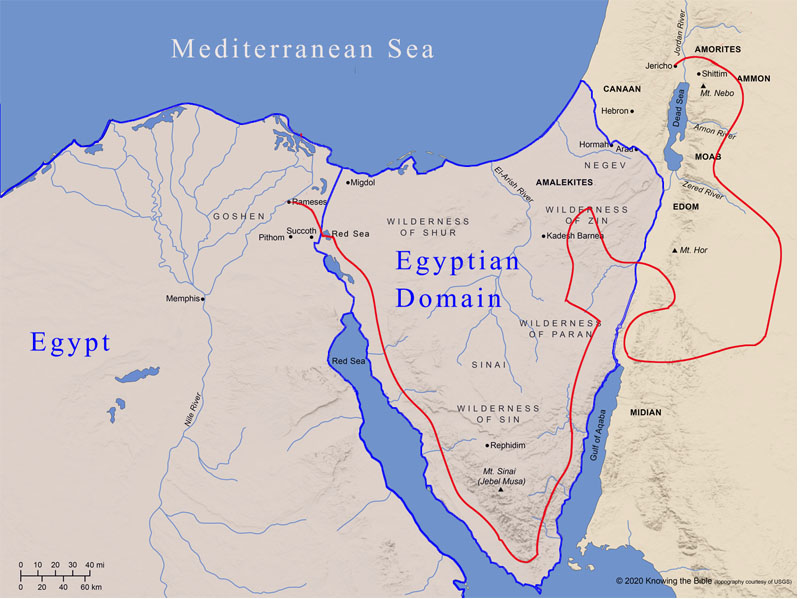
First, the magicians warned Pharoah that it was the "finger of God" that was the cause of the plagues. Now God warns him that it will be the "hand of God" that will cause severe pain and suffering. 1 Then the Lord said to Moses, "Go in to Pharaoh and tell him, 'Thus says the Lord God of the Hebrews: "Let My people go, that they may serve Me. For if you refuse to let them go, and still hold them, behold, the hand of the Lord will be on your cattle in the field, on the horses, on the donkeys, on the camels, on the oxen, and on the sheep—a very severe pestilence. The Egyptians worshipped their cattle. This plague was a judgment on the goddess Hathor and the god Apis, who were both depicted as cattle. Hathor became one of Egypt's most important deities. She is often depicted wearing a headdress of cow horns or as a cow. Apis was an Egyptian bull god of fertility and the underworld. This plague attacked the false gods, however it had great impact on Egypt's economic prosperity. The more livestock one owned, the wealthier one was. Thus, to destroy livestock was equivalent to destroying one's wealth and livelihood. The Egyptian people were to be deeply affected by this plague. The fifth plague, which killed off the Egyptian livestock, has similarities of rinderpest which causes high fever, diarrhorea and ulcers in the mouths and noses. Rinderpest is spread between animals by direct contact and possibly aerosol over limited distances. The virus can be spread via secretions from the eyes, nose, or mouth, and the faeces, urine, blood, milk, or reproductive fluids of infected animals. Revelation 6:8 So I looked, and behold, a pale horse. And the name of him who sat on it was Death, and Hades followed with him. And power was given to them over a fourth of the earth, to kill with sword, with hunger, with death, and by the beasts of the earth. 4 And the Lord will make a difference between the livestock of Israel and the livestock of Egypt. So nothing shall die of all that belongs to the children of Israel." ' " Then the Lord appointed a set time, saying, "Tomorrow the Lord will do this thing in the land." While these plagues can be associated with natural phenomenon, the children of Israel are spared from the devastation, thus validating beyond a shadow of doubt that it was a miracle. This is warning number two in the second set of plagues. The Lord gave Pharoah a day to relent before he began judgement. Take note that chapter 1 states that all the cattle that is in the field will be stricken by the Hand of God. Apparently, the delay allowed any Egyptians who believed Moses to save their cattle by housing them for all the cattle in the field will be affected. (See verse 19) 6 So the Lord did this thing on the next day, and all the livestock of Egypt died; but of the livestock of the children of Israel, not one died. Then Pharaoh sent, and indeed, not even one of the livestock of the Israelites was dead. But the heart of Pharaoh became hard, and he did not let the people go. The other plagues of the water, frogs, lice, and flies were very troublesome and terrible but the loss of property was much more devastating, at least to the people of Egypt. However, it didn't affect him as much since he was rich and could stand to lose some of his wealth. Pharoah did not believe the the first reports about the Hebrews being exempt so he sent a messenger to confirm the rumors. Yet it was still not enough to cause him to yield and let the children of Israel go. 8 So the Lord said to Moses and Aaron, "Take for yourselves handfuls of ashes from a furnace, and let Moses scatter it toward the heavens in the sight of Pharaoh. And it will become fine dust in all the land of Egypt, and it will cause boils that break out in sores on man and beast throughout all the land of Egypt." Plague number six comes without warning. God instructed Moses to take "ashes from a furnace". Most of the bricks made by the Hebrews were dried in the sun, however a portion were baked in brick-kilns. Previously, a miracle was from earth, water, and now it is from air. Job 2:7 So Satan went out from the presence of the Lord, and struck Job with painful boils from the sole of his foot to the crown of his head. Does this plague sound familiar? Moses later reminded Israel as they entered the Promised land of the plagues that were on Pharoah for disobedience. Deuteronomy 4:20 But the Lord has taken you and brought you out of the iron furnace, out of Egypt, to be His people, an inheritance, as you are this day. 10 Then they took ashes from the furnace and stood before Pharaoh, and Moses scattered them toward heaven. And they caused boils that break out in sores on man and beast. And the magicians could not stand before Moses because of the boils, for the boils were on the magicians and on all the Egyptians. But the Lord hardened the heart of Pharaoh; and he did not heed them, just as the Lord had spoken to Moses. At least six times before this the scripture says that Pharaoh hardened his own heart. God hardens no man's heart who has not first hardened it himself. The same fire softens wax and hardens clay. God's hardened Pharaoh's heart by strengthening what Pharoah's had already set himself. 'Harden' is the result of disobedience to the Lord's appeals. The Egyptians, were aware of epidemics. Among the gods they worshiped were Sekhmet, a lion-headed goddess with alleged power over disease; Sunu, the pestilence god; and Isis, goddess of healing. The Egyptians worshipped several healing deities, on occasion even sacrificing human beings to them. The victims were burned on an altar, and their ashes were cast into the air, where the wind would blow the ashes over the people. This was viewed as a blessing for them. Priests were held to the highest standards of cleanliness. They washed twice a day, shaved their heads, and always wore freshly washed linen clothes which has antibacterial properties. They had to be clean from any skin disease or they were forbidden from serving. They suffered so horribly from the boils that they could barely stand, so their worship was halted. According to the Centers for Disease Control and Prevention, the mummy of Pharaoh Ramses V as well as several others were found to have smallpox scars. The sixth plague constitutes the earliest medical report on the detrimental impact of soot/dust upon human health and the environment, which is now well-known, having been documented over time since then. Historical records suggest the presence of smallpox as early as 3500 BC. Revelation 16:2 So the first went and poured out his bowl upon the earth, and a foul and loathsome sore came upon the men who had the mark of the beast and those who worshiped his image. 13 Then the Lord said to Moses, "Rise early in the morning and stand before Pharaoh, and say to him, 'Thus says the Lord God of the Hebrews: "Let My people go, that they may serve Me, for at this time I will send all My plagues to your very heart, and on your servants and on your people, that you may know that there is none like Me in all the earth. Now if I had stretched out My hand and struck you and your people with pestilence, then you would have been cut off from the earth. But indeed for this purpose I have raised you up, that I may show My power in you, and that My name may be declared in all the earth. As yet you exalt yourself against My people in that you will not let them go. God, in His mercy, told Moses to give Pharoah another warning, to give him an opportunity to repent. God declared that He could have destroyed the people with the previous plagues but in spite of that, Pharoah continued to prevent God's people from going to worship Him. The demonstration of God's power was reported at once to the surrounding nations. Originally worshipped as a cow, Hathor was a goddess of the sky, sometimes represented as a cow with stars. In her earliest days, she rampaged throughout the land destroying anyone who dared to mock her father, Ra. 18 Behold, tomorrow about this time I will cause very heavy hail to rain down, such as has not been in Egypt since its founding until now. Therefore send now and gather your livestock and all that you have in the field, for the hail shall come down on every man and every animal which is found in the field and is not brought home; and they shall die." ' " A secular theory suggests that about 3,500 years ago a volcanic eruption occured on an island north of Crete in the Aegean Sea. It is possible that the volcanic ash mixed with thunderstorms above Egypt, lead to a dramatic hailstorm of hail and hot ash, lava and rock. However it never fell on Gochen. 20 He who feared the word of the Lord among the servants of Pharaoh made his servants and his livestock flee to the houses. But he who did not regard the word of the Lord left his servants and his livestock in the field. Given the time and a warning to get every man and animal out of the field, those who believed were able to save themselves and their livestock. But others did not believe, and left their cattle in the field. 22 Then the Lord said to Moses, "Stretch out your hand toward heaven, that there may be hail in all the land of Egypt—on man, on beast, and on every herb of the field, throughout the land of Egypt." And Moses stretched out his rod toward heaven; and the Lord sent thunder and hail, and fire darted to the ground. And the Lord rained hail on the land of Egypt. So there was hail, and fire mingled with the hail, so very heavy that there was none like it in all the land of Egypt since it became a nation. And the hail struck throughout the whole land of Egypt, all that was in the field, both man and beast; and the hail struck every herb of the field and broke every tree of the field. Only in the land of Goshen, where the children of Israel were, there was no hail. There are four elements of nature: Water, Earth, Air, & Fire. Without these, the world could not function in the perfect and orderly fashion that it does. These four elements were used as examples of God's wrath against the Egyptians. He also will strike earthly elements during the tribulation. Revelation 8:7 The first angel sounded: And hail and fire followed, mingled with blood, and they were thrown to the earth. And a third of the trees were burned up, and all green grass was burned up. 27 And Pharaoh sent and called for Moses and Aaron, and said to them, "I have sinned this time. The Lord is righteous, and my people and I are wicked. Entreat the Lord, that there may be no more mighty thundering and hail, for it is enough. I will let you go, and you shall stay no longer." Pharaoh was more impressed by this plague than by any preceding one. He now confesses that he is to blame. However, he relents only from fear. 29 So Moses said to him, "As soon as I have gone out of the city, I will spread out my hands to the Lord; the thunder will cease, and there will be no more hail, that you may know that the earth is the Lord's. But as for you and your servants, I know that you will not yet fear the Lord God." Moses promised his request would be granted, proving God ruled as Lord over Egypt. He didn't believe that pharaoh will keep his word, yet he granted the request so that pharaoh would be without excuse. 31 Now the flax and the barley were struck, for the barley was in the head and the flax was in bud. But the wheat and the spelt were not struck, for they are late crops. Linen garments were made from flax. Barley was grown as food for horses, used to manfacture beer and was also used in making some types of bread. The corn that had not come up yet was spared but the corn above ground was destroyed. The wheat and the spelt were not yet up. 33 So Moses went out of the city from Pharaoh and spread out his hands to the Lord; then the thunder and the hail ceased, and the rain was not poured on the earth. The storm killed both men and cattle but the land of Goshen was spared. Moses knew by faith that every hail-stone had its direction from God so he left the city safe from the storm. The prayer of Moses opened and shut heaven, like Elijah's. Such is the power of God's two witnesses: Revelation 11:6 These have power to shut heaven, so that no rain falls in the days of their prophecy; And when Pharaoh saw that the rain, the hail, and the thunder had ceased, he sinned yet more; and he hardened his heart, he and his servants. So the heart of Pharaoh was hard; neither would he let the children of Israel go, as the Lord had spoken by Moses. Pharoah is still consumed by his own vanity and sense of importance and again hardens his heart. The officers of the Pharoah's court upheld the king in his ungodly madness, either out of compliancy, or because they were really not yet convinced of the overpowering might of God. Bible Study Questions 1. When did Moses release the fifth plage: the diseased livestock?
2. What livestock survived the plague?
3. What was the sixth plague?
4. What did Moses and Aaron use for the sixth plague? 5. What happened during the sixth plague? 6. What was the seventh plague?
7. When did the Lord instruct to Moses to deliver the message?
8. Why did God send the seventh plague?
9. What happened during the seventh plague?
10. When Pharaoh saw that the plague had ceased, what did he do?
|
| Cassie, Matt, Sue | |