Exodus 8 – Frogs/Lice/Flies
Timeline: 1450 BC
|
|
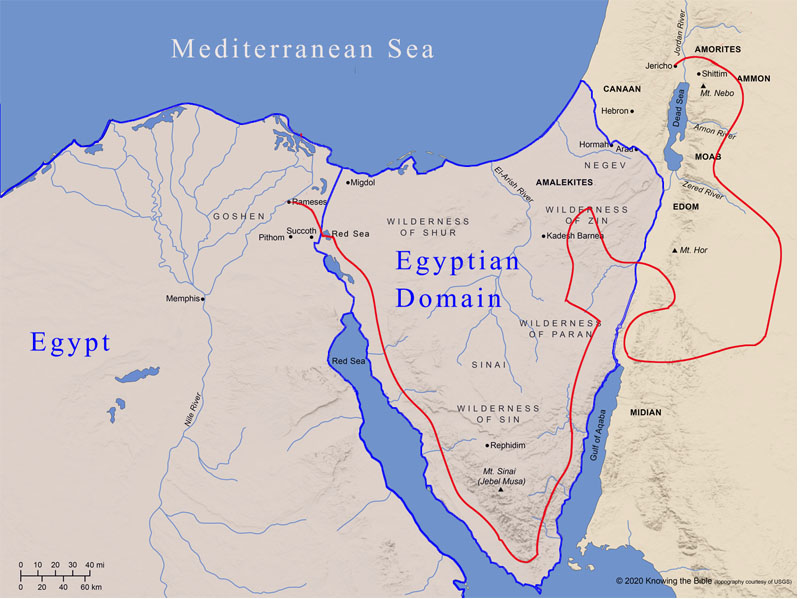
God encouraged Moses by telling him He would allow Moses to do fantastic miracles in the sight of Pharaoh. God commanded Moses, who gave the message to Aaron who then spoke to Pharaoh. Again, God warned Moses that Pharaoh will be stubborn but in the end, he would let the children of Israel go. 1 And the Lord spoke to Moses, "Go to Pharaoh and say to him, 'Thus says the Lord: "Let My people go, that they may serve Me. But if you refuse to let them go, behold, I will smite all your territory with frogs. So the river shall bring forth frogs abundantly, which shall go up and come into your house, into your bedroom, on your bed, into the houses of your servants, on your people, into your ovens, and into your kneading bowls. And the frogs shall come up on you, on your people, and on all your servants." '" This plague was a judgment against Heqet, with a female body and head of a frog, the goddess symbolized childbirth and midwifery. Pharaoh had ordered all newborn males be drowned by the midwives in the Nile. The plagues proved that God was bigger than their gods. Frogs were thought to be sacred and killing one, even on accident was a capital offense. Annually, the Nile would overflow its banks and when the water receded, the soil became rich and fertile. Frogs would emerged as a result, and it was a sign to the Egyptians that it was time to begin planting. 5 Then the Lord spoke to Moses, "Say to Aaron, 'Stretch out your hand with your rod over the streams, over the rivers, and over the ponds, and cause frogs to come up on the land of Egypt.' "So Aaron stretched out his hand over the waters of Egypt, and the frogs came up and covered the land of Egypt. And the magicians did so with their enchantments, and brought up frogs on the land of Egypt. The phenomenon of "raining frogs" has been reported multiple times throughout history and in a range of locations around the world. If you do a search for "raining frogs" or "frogs invade neighborhood", you will find story after story of how plagues of frogs have shown up in various parts of the world. The difference here is that these frogs did not happen by accident! Revelation 16:12-14 Then the sixth angel poured out his bowl on the great river Euphrates, and its water was dried up, so that the way of the kings from the east might be prepared. And I saw three unclean spirits like frogs coming out of the mouth of the dragon, out of the mouth of the beast, and out of the mouth of the false prophet. For they are spirits of demons, performing signs, which go out to the kings of the earth and of the whole world, to gather them to the battle of that great day of God Almighty. 8 Then Pharaoh called for Moses and Aaron, and said, "Entreat the Lord that He may take away the frogs from me and from my people; and I will let the people go, that they may sacrifice to the Lord." Pharaoh called Moses and Aaron to beg the Lord to remove the plague. This is the first time Pharoah acknowledged God. He could not ask his magicians since they were thought to be sacred and were not to be killed. Pharaoh made a false promise to let the people go to sacrifice to the Lord. 9 And Moses said to Pharaoh, "Accept the honor of saying when I shall intercede for you, for your servants, and for your people, to destroy the frogs from you and your houses, that they may remain in the river only." To give God the glory, Moses elevates Pharaoh, and told him to fix the time for the frogs to be destroyed through God's intercession. 10 So he said, "Tomorrow." And he said, "Let it be according to your word, that you may know that there is no one like the Lord our God. And the frogs shall depart from you, from your houses, from your servants, and from your people. They shall remain in the river only." The king appointed the following day, possibly giving his magicians a chance to eradicate the frogs, but the attempt made by the magicians only increased the population! Then Moses and Aaron went out from Pharaoh. And Moses cried out to the Lord concerning the frogs which He had brought against Pharaoh. So the Lord did according to the word of Moses. And the frogs died out of the houses, out of the courtyards, and out of the fields. They gathered them together in heaps, and the land stank. But when Pharaoh saw that there was relief, he hardened his heart and did not heed them, as the Lord had said. God did as Moses asked, He took the plague of frogs away in a manner that made its removal almost as bad as the infestation. He still refuses to accept that God is mightier than all his gods and again hardens his heart. Up to now, the magicians have been able to imitate the plagues. After this, they will no longer be able to imitate any of the plagues. 16 So the Lord said to Moses, "Say to Aaron, 'Stretch out your rod, and strike the dust of the land, so that it may become lice throughout all the land of Egypt.' " And they did so. For Aaron stretched out his hand with his rod and struck the dust of the earth, and it became lice on man and beast. All the dust of the land became lice throughout all the land of Egypt. This plague came without warning, mocking Uatchit, the god who protected Egyptions from swarming insects and Seb, who protected people from lice. Some translations describe "fleas," as "sandflies," "gnats," "ticks" or "mosquitoes." The Hebrew word indicates that it is a creature that digs into the skin. Herodotus, the famous fifth-century Greek historian states: "The priests shave their bodies all over every other day to guard against the presence of lice, or anything else equally unpleasant, while they are about their religious duties …. [They] wear linen only, and shoes made from the papyrus plant …. They bathe in cold water twice a day and twice every night." 18 Now the magicians so worked with their enchantments to bring forth lice, but they could not. So there were lice on man and beast. Then the magicians said to Pharaoh, "This is the finger of God." But Pharaoh's heart grew hard, and he did not heed them, just as the Lord had said. The lack of frogs in the river could have let insect populations, normally kept in check by the frogs, increase massively. The rotting corpses of fish and frogs would have attracted significantly more insects to the areas near the Nile. An infestation with certain insects could have set the stage for the later plagues. Revelation 11:3 And I will give power to my two witnesses, and they will prophesy one thousand two hundred and sixty days, clothed in sackcloth." Revelation 11:6 These have power to shut heaven, so that no rain falls in the days of their prophecy; and they have power over waters to turn them to blood, and to strike the earth with all plagues, as often as they desire. We can divide the first nine plagues into groups of three. The first three dealt with the discomfort of the Egyptians. They were extremely annoying but the effects were temporary and quickly reversible. Each plague left the people largely untouched. In each of these, Aaron's rod was used to turn water into blood, bring the frogs into the land and turn dust to lice. Each group begins with a warning, then a warning and then no warning. The book of Revelation also describes three series of judgments: The Seven Seal Judgments (Revelation chapter 6), The Seven Trumpet Judgments (Revelation chapters 8-9), The Seven Vial or Bowl Judgments (Revelation chapters 15-16). Now the second set of plagues begins with a warning. 20 And the Lord said to Moses, "Rise early in the morning and stand before Pharaoh as he comes out to the water. Then say to him, 'Thus says the Lord: "Let My people go, that they may serve Me. Or else, if you will not let My people go, behold, I will send swarms of flies on you and your servants, on your people and into your houses. The houses of the Egyptians shall be full of swarms of flies, and also the ground on which they stand." Pharoah's daily ritual during the summer was to give homage to the Nile River, to worship his gods. The Hebrew word for the fourth plague, arov, is ambiguous. It conveys the idea of a swarm or a mixture of something, but does not specify the exact nature of the swarm. The specific translation for the word "flies" stems from ancient Greek translations, which use a word that means dog-fly. One of Satan's title is Beelzebub which means "lord of the flies". Revelation 6:8 I looked, and behold, a pale horse. And the name of him who sat on it was Death, and Hades followed with him. And power was given to them over a fourth of the earth, to kill with sword, with hunger, with death, and by the beasts of the earth. 22 "And in that day I will set apart the land of Goshen, in which My people dwell, that no swarms of flies shall be there, in order that you may know that I am the Lord in the midst of the land. I will make a difference between My people and your people. Tomorrow this sign shall be." ' " In this set of plagues, there are some notable differences. The first three plagues took place throughout all of Egypt. Now we see that the land of Goshen was exempt from the swarms of flies. God did not order Moses and Aaron to send the swarms, He sent this plague Himself. 24 And the Lord did so. Thick swarms of flies came into the house of Pharaoh, into his servants' houses, and into all the land of Egypt. The land was corrupted because of the swarms of flies. Then Pharaoh called for Moses and Aaron, and said, "Go, sacrifice to your God in the land." The Egyptians were disfigured by the swellings produced by their sting. The plants on which they deposited their eggs were destroyed. Pharaoh now admits the existence and power of the God whom he had professed not to know; however he recognizes Him only as the God of the Israelites. One of the tools Satan uses is compromise. He offers compromises to keep us under his control. This is the first time Pharaoh gave permission for Moses and his people to take time off to offer their sacrifices, as long as they remain in the land. 26 And Moses said, "It is not right to do so, for we would be sacrificing the abomination of the Egyptians to the Lord our God. If we sacrifice the abomination of the Egyptians before their eyes, then will they not stone us? We will go three days' journey into the wilderness and sacrifice to the Lord our God as He will command us." Egyptians thought shepherds were an abominations. Part of the offering included the sacrifice of lambs. In addition, bulls were also offered which Egyptians considered holy and to kill a bull was a capital offence. Therefore, the Hebrews had to go three days into the desert, far enough away so an not to be offensive and to safely perform their sacrifices. 28 So Pharaoh said, "I will let you go, that you may sacrifice to the Lord your God in the wilderness; only you shall not go very far away. Intercede for me." Once again Pharoah offers a compromise. Go away to worship but don't go far. Pharoah is fully aware that they will not return. So he once again begs for Moses to pray to the Lord to remove the plague. 29 Then Moses said, "Indeed I am going out from you, and I will entreat the Lord, that the swarms of flies may depart tomorrow from Pharaoh, from his servants, and from his people. But let Pharaoh not deal deceitfully anymore in not letting the people go to sacrifice to the Lord." Moses says he will intercede but he knows that Pharoah will not keep his promise in spite of his warning not to be deceitful. Hebrews 10:26-27 For if we sin willfully after we have received the knowledge of the truth, there no longer remains a sacrifice for sins, but a certain fearful expectation of judgment, and fiery indignation which will devour the adversaries. 30 So Moses went out from Pharaoh and entreated the Lord. And the Lord did according to the word of Moses; He removed the swarms of flies from Pharaoh, from his servants, and from his people. Not one remained. But Pharaoh hardened his heart at this time also; neither would he let the people go. Not only did God remove the swarms, but He removed ALL of them. They disappeared as quickly as they came. But Pharoah "hardened his heart" - he became more stubborn and failed to respond to God's revelation. In the end, Pharaoh will do what God commanded. Had he listened in the first place, Egypt would have been spared from all the plagues. Since he was obstinate, he and the Egyptians suffered the concequences of his actions. Steve Shirley - How long did the plagues last Bible Study Questions 1. What happened when Aaron stretched his rod over the waters of Egypt?
2. Did the frogs invade the Hebrews as well as the Egyptians?
3. What did Pharoah promise Moses and Aaron after the frog plague?
4. How did Moses react to Pharoah? 5. What was the third plague? 6. What did the magicians do to replicate the plague of lice?
7. Where did God's people live when they were set apart from the plague?
8. Why didn't Moses want to make sacrifices in Egypt?
9. What was Moses' warning to Pharoah?
10. How many swarms remained after God removed them?
|
| Matt, Cassie, Sue, Mary | |