Exodus 29 - Consecration of the Tabernacle and the Altar
Timeline: 1450 BC
|
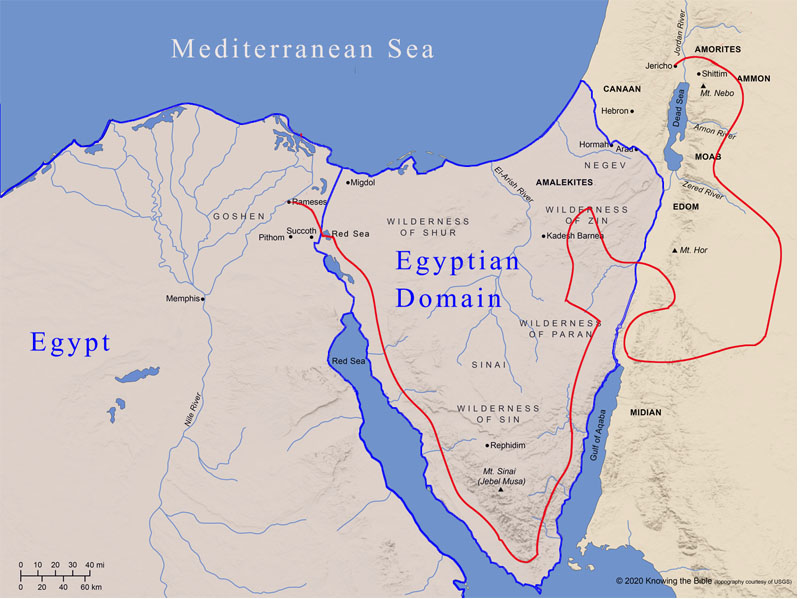
Israelite Journeys Rameses
|
Ordination today is easy. You go to a website, click on "Get Ordained", fill out the form, pay a fee and check your email for confirmation. Being ordained gives you the authority to officiate weddings, funerals, perform last rites, offer pastoral or spiritual counsel, and perform other services within the authority of the position. God had a different idea for ordination. He instructed Moses to ordain Aaron and his sons as priests. His purpose was to set them aside for His purpose. God's desire was to dwell among His people. Aaron and his sons acted as intermediaries between God and His people. However, going into His presence required special sanctification. These are the instructions God gave to Moses in order to prepare Aaron and his sons for their priestly duties. All of this was necessary for the people to have fellowship with God.
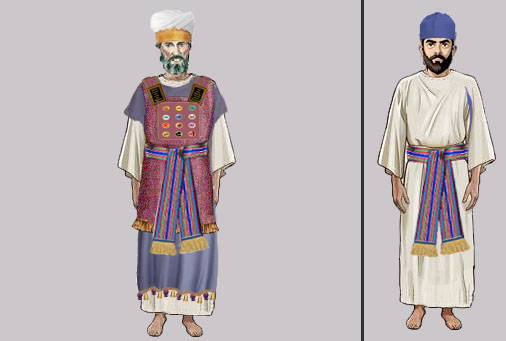
Exodus 29:1 "And this is what you shall do to them to hallow them for ministering to Me as priests: Take one young bull and two rams without blemish, and unleavened bread, unleavened cakes mixed with oil, and unleavened wafers anointed with oil (you shall make them of wheat flour). You shall put them in one basket and bring them in the basket, with the bull and the two rams. The sacrificing of an animal is symbolic of the destructive nature of sin. Without the shedding of blood there is no remission of sin. Three perfect animals were required for sacrifice. The young bull was for the sin offering, the first ram for the burnt offering and the second ram for ordination. Without blemish means no obvious external defects for only such animals are worthy of sacrifice to God. The three Loaves of unleavened bread symbolized the fellowship offering. They were symbols of God's providence. Unleavened bread, such as was used at the time of the Passover, is distinguished from cakes and wafers. This was bread of a larger size, a loaf or loaves of bread. Cakes were unleavened, made of flour mixed with oil and were a lesser and thinner sort of bread than unleavened bread. Wafers were thinner yet, sort of like our pancakes, anointed with oil after the baking of them. They were made from the finest of the wheat as opposed to barley which was used by the poor. Bread signified divine provision, hospitality, and communion. Each type of bread represents a different aspect of the believer's life that must be consecrated to God—whether it's purity (unleavened bread), the richness of spiritual life (bread with oil), or the simplicity of obedience (thin loaf). The bread was all brought together in the basket at the same time as the sacrificial animals. Exodus 29:4 "And Aaron and his sons you shall bring to the door of the tabernacle of meeting, and you shall wash them with water. Then you shall take the garments, put the tunic on Aaron, and the robe of the ephod, the ephod, and the breastplate, and gird him with the intricately woven band of the ephod. You shall put the turban on his head, and put the holy crown on the turban. And you shall take the anointing oil, pour it on his head, and anoint him. Then you shall bring his sons and put tunics on them. And you shall gird them with sashes, Aaron and his sons, and put the hats on them. The priesthood shall be theirs for a perpetual statute. So you shall consecrate Aaron and his sons. A uniform draws attention to a person's office or function, and at the same time, plays down his or her individual personality. These distinctive garments impressed upon the priests the awesome task that they had and reminded the people of the high office they held. All these garments were put on Aaron in specific order. The tunic of fine linen was put on first, next to his flesh. Next was the blue robe of the ephod with pomegranates and golden bells at the hem. The ephod of gold, blue, purple, scarlet, and fine twined linen was a short garment put over the robe and the breastplate with the Urim and Thummim inside and the twelve precious stones attached. The band of the ephod was secured at his waist and the turban placed on his head and the plate of pure gold was fastened to his forehead. Then Moses poured holy anointing compounded specially mixed by a perfumer upon his head. The ointment consisted of olive oil that was mixed with liquid myrrh, cinnamon, cane, and cassia (which is similar to cinnamon but from a different plant). The psalms indicate that no oil was spared in this ritual, for it ran down his beard and to the hem of his garment. Aaron's sons were then dressed with tunics and a sash was placed on their waists. Moses placed hats on their head but they were not anointed with oil. All these garments were put on them publicly at the door of the tabernacle. Exodus 29:10 "You shall also have the bull brought before the tabernacle of meeting, and Aaron and his sons shall put their hands on the head of the bull. Then you shall kill the bull before the Lord, by the door of the tabernacle of meeting. You shall take some of the blood of the bull and put it on the horns of the altar with your finger, and pour all the blood beside the base of the altar. And you shall take all the fat that covers the entrails, the fatty lobe attached to the liver, and the two kidneys and the fat that is on them, and burn them on the altar. But the flesh of the bull, with its skin and its offal, you shall burn with fire outside the camp. It is a sin offering. The sacrifice of the sin offering is rich with symbolic meaning. Aaron and his sons put their hands on the head of the bull, to representative the transfer their impure nature and sin to the bull. They made confession of sin and then sacrificed the young bull, thus making atonement for those men. The altar was sanctified with the blood of the sin offering in which some of the blood is smeared on the horns of the altar while the rest poured in a receptacle that protruded around the altar, around a foot and a half above the ground. After the sacrifice, the choicest parts were burned on the altar, the juice from the fat added fuel to the fire. This was a pleasing aroma to the Lord, signifying their acceptance of its substitution. The rest was destroyed outside the camp. Burning the remains of the bull outside the camp symbolized that the sacrifice separated the people from their sins. Exodus 29:15 "You shall also take one ram, and Aaron and his sons shall put their hands on the head of the ram; and you shall kill the ram, and you shall take its blood and sprinkle it all around on the altar. Then you shall cut the ram in pieces, wash its entrails and its legs, and put them with its pieces and with its head. And you shall burn the whole ram on the altar. It is a burnt offering to the Lord; it is a sweet aroma, an offering made by fire to the Lord. The ram was cut into pieces, so it could fit entirely on the altar at one time. The internal organs and legs of the ram were washed reflecting the idea of complete and pure offerings. The whole animal was to be consumed by fire as opposed to other sacrificial animals being partially consumed. Exodus 29:19 "You shall also take the other ram, and Aaron and his sons shall put their hands on the head of the ram. Then you shall kill the ram, and take some of its blood and put it on the tip of the right ear of Aaron and on the tip of the right ear of his sons, on the thumb of their right hand and on the big toe of their right foot, and sprinkle the blood all around on the altar. And you shall take some of the blood that is on the altar, and some of the anointing oil, and sprinkle it on Aaron and on his garments, on his sons and on the garments of his sons with him; and he and his garments shall be hallowed, and his sons and his sons' garments with him. The third sacrifice was a ram of ordination. It began by slaughtering the ram, allowing them again to identify with the animal that it was dying instead of them. The blood that was applied to Aaron and his sons symbolized a total consecration of their life to God. The ear represented the priests' need to listen to God's word. The thumb of the right hand symbolized the diligence in the sacred ministry carrying out God's commands. The big toe of the right foot represented their walk and the direction of their lives, indicating that their entire journey and lifestyle were to be dedicated to God. The combination of both the sacrificial blood and the anointing oil were designed to ensure that they were fully prepared and sanctified for their sacred duties. This total consecration is a reminder that service to God is not just about performing religious duties; it involves a complete commitment of the heart, mind, and body. Exodus 29:22 "Also you shall take the fat of the ram, the fat tail, the fat that covers the entrails, the fatty lobe attached to the liver, the two kidneys and the fat on them, the right thigh (for it is a ram of consecration), one loaf of bread, one cake made with oil, and one wafer from the basket of the unleavened bread that is before the Lord; and you shall put all these in the hands of Aaron and in the hands of his sons, and you shall wave them as a wave offering before the Lord. You shall receive them back from their hands and burn them on the altar as a burnt offering, as a sweet aroma before the Lord. It is an offering made by fire to the Lord. These are the parts of the ram that were to be set aside during the sacrifice. Each of these parts was considered the best and most valuable portions of the animal, and they underscored the seriousness of the priestly office and the importance of giving God the best in worship and service. Aaron and his sons were to open their hands and Moses would place the offerings on their open hands. They would wave them to and fro, from east to west, and from north to south. Then they were then taken back by Moses and he put them on the fire. Exodus 29:26 "Then you shall take the breast of the ram of Aaron's consecration and wave it as a wave offering before the Lord; and it shall be your portion. And from the ram of the consecration you shall consecrate the breast of the wave offering which is waved, and the thigh of the heave offering which is raised, of that which is for Aaron and of that which is for his sons. It shall be from the children of Israel for Aaron and his sons by a statute forever. For it is a heave offering; it shall be a heave offering from the children of Israel from the sacrifices of their peace offerings, that is, their heave offering to the Lord. They took their portion and again waved it before the Lord. The wave offering was done in a back and forth movement, but the heave offering was lifted up to the Lord. Exodus 29:29 "And the holy garments of Aaron shall be his sons' after him, to be anointed in them and to be consecrated in them. That son who becomes priest in his place shall put them on for seven days, when he enters the tabernacle of meeting to minister in the holy place. Upon the passing of Aaron, his holy garments would be passed down to his sons who were to take his place. They would then go through the ordination ritual and become the high priest. Exodus 29:31 "And you shall take the ram of the consecration and boil its flesh in the holy place. Then Aaron and his sons shall eat the flesh of the ram, and the bread that is in the basket, by the door of the tabernacle of meeting. They shall eat those things with which the atonement was made, to consecrate and to sanctify them; but an outsider shall not eat them, because they are holy. And if any of the flesh of the consecration offerings, or of the bread, remains until the morning, then you shall burn the remainder with fire. It shall not be eaten, because it is holy. This act of eating the sacred ordination meal within the holy space signifies their acceptance into the priesthood and their role as mediators between God and His people. The meal was holy and set apart for the priests, and any remaining food was to be burned in the morning. Sharing a meal in God's presence was an act of communion, reflecting the fellowship that God desires with His people. Exodus 29:35 "Thus you shall do to Aaron and his sons, according to all that I have commanded you. Seven days you shall consecrate them. And you shall offer a bull every day as a sin offering for atonement. You shall cleanse the altar when you make atonement for it, and you shall anoint it to sanctify it. Seven days you shall make atonement for the altar and sanctify it. And the altar shall be most holy. Whatever touches the altar must be holy. The ordination process was detailed and rigorous. They were to stay at the entrance of the tent for seven days. The seven days symbolize completeness and perfection. The daily sin offering involved various sacrifices, rituals, and symbolic acts that set Aaron and his sons apart for their holy duties. Exodus 29:38 "Now this is what you shall offer on the altar: two lambs of the first year, day by day continually. One lamb you shall offer in the morning, and the other lamb you shall offer at twilight. With the one lamb shall be one-tenth of an ephah of flour mixed with one-fourth of a hin of pressed oil, and one-fourth of a hin of wine as a drink offering. And the other lamb you shall offer at twilight; and you shall offer with it the grain offering and the drink offering, as in the morning, for a sweet aroma, an offering made by fire to the Lord. This shall be a continual burnt offering throughout your generations at the door of the tabernacle of meeting before the Lord, where I will meet you to speak with you. And there I will meet with the children of Israel, and the tabernacle shall be sanctified by My glory. So I will consecrate the tabernacle of meeting and the altar. I will also consecrate both Aaron and his sons to minister to Me as priests. I will dwell among the children of Israel and will be their God. And they shall know that I am the Lord their God, who brought them up out of the land of Egypt, that I may dwell among them. I am the Lord their God. They were to sacrifice one yearling lamb in the morning and the other between sunset and dusk with about two quarts of fine wheat flour mixed with a quart of virgin olive oil. (The word hin is a unit of liquid measure equal to about one and one half gallons and an ephah is a unit of dry measure equal to about a bushel.) The beaten oil is considered to be the first fruit of the olive obtained by pounding olives in a mortar, as apposed to crushing them in a mill. The 6 quarts of wine were poured out upon the altar as a drink offering. The repetition of the need for atonement and consecration in these instructions emphasizes the seriousness with which God views worship and the necessity of purity in His service. By commanding the daily sacrifice and the anointing of the altar, God was ensuring that the priests and the place of worship were made holy and acceptable to Him. God commanded them to continue this ritual so He could meet with His people on a regular basis. His willingness to communicate with His people shows His desire for a relationship with them and His intention to guide and direct their lives. Bible Study Questions 1. Why are Aaron and his sons consecrated? 1. To show the people they are priests. 2. Where should Aaron and his sons get dressed? 1. At the door of the tabernacle. 3. On what part of the bull should Aaron and his sons put their hands? 1. On the head of the bull. 4. What should they do with the blood of the ram? 1. Put it on the horns of the altar with his finger. 5. What shall they do to the wave offering? 1. Burn them on the altar as a burnt offering before the Lord. 6. How many days will the priest minister in the holy place? 1. One day. 7. What should they do if any of the consecration offerings, remain until the morning? 1. Feed it to the animals. 8. What should they offer every day as a sin offering for atonement? 1. A bull. 9. How many lambs should they offer each day? 1. One. 10. How long should they offer burnt offerings? 1. Until they reach the Promised Land. |
| Joe, Cassie, Matt | |