Exodus 15 - Song of Moses & Miriam
Timeline: 1450 BC
|
Rameses |
In addition to Moses being a great leader, God gave him a gift of song writing. So in celebration of their escape from Egyptian bondage, he wrote the first song recorded in the scriptures. One of the best ways to memorize something is to put it to music. This song was written to remind Israel of their history as a chosen people and to instruct them as to their obligations under their covenant with the Lord moving forward. This is a song of redemption. The Old Testament contains three songs written by Moses. In addition to this one, God had commanded him to write a second song called "The Song of Moses" which appears in Deuteronomy 32:1-43, written as a warning to the Israelites to observe the laws God had given to them. The third song is recorded in Psalm 90, noted as "A Prayer of Moses, the man of God." He encouraged his people to learn his songs and pass them down for generations to come. In the New Testament, the last song will be sung in Heaven. Revelation 15:3-4 was also written by Moses, song of God's faithfulness and Israel's unfaithfulness and a warning designed to get the attention of those whose tendency was to forget God. Exodus 15:1Then Moses and the children of Israel sang this song to the LORD, and spoke, saying: This song is written in sections. Notice that each section begins with glorifying the Lord. They were worshipping God through song. Worship is the proper response to God from the heart whereby we place God above all else. The Israelites gave all the glory to God for their deliverance. The introduction contains the theme of the song. The refrain was repeated at the close of each sub-division by Miriam and her choir of women: "I will sing to the LORD, Verses 1-5: These verses contain descriptive praises dedicated to the LORD for who He is, to stress His power. This song describes exactly how God won the victory over Pharaoh, his army, and the false gods of Egypt. They sang praises to God in response to God hurling the horse and the rider into the sea. The LORD is my strength and my song, The people were weak in themselves; but God strengthened them: His grace was their strength. They acknowledged that what God had done for them was for their fathers' sake:
The LORD is a warrior, God is mighty, powerful, and victorious, man had no part in the victory; the battle was the Lord's. In battle he always overcomes. He has just proved Himself to be the God who rules with unlimited might. Pharaoh's chariots and army The Angel of the Lord, who was Jehovah himself, cast the proud sinners into the sea and under the weight of their own guilt was drowned. The same image describes Pharaoh's earlier order to throw the Hebrew babies into the Nile River. Their sin had made them hard like a stone, and now they justly sink like a stone. God did to the Egyptians what they had done to the Israelites. Verses 6-10: Hebrew poetry is often written in synonymous parallelism rather than rhyme. Synonymous parallelism is a literary device that involves repeating the same idea in two different ways in order to highlight and amplify important ideas. Your right hand, O LORD, When God works with His right hand, it is a work of skill and power. This idea of the right hand is used in the Scriptures more than fifty times.
You overthrew Your adversaries When the spiritual enemies of the people of God rise against them, God executes His judgment and they are overthrown by Him. It is the execution of His justice. God's wrath is pictured as a fire, consuming the foe as quickly as if they were dry stubble.
At the blast of Your nostrils Miracles are, by definition, a supernatural act of God where he intervenes in nature to alter an otherwise natural course of events. The blast of God's nostrils corresponds to the east wind which drove the waters on the north and south, overhanging the sands, and was kept back by the strong wind in the deep bed of the Red Sea and the ground was made dry and easy to cross. This was truly a miracle. The enemy declared, Pharaoh and his warriors were determined and over-confident. They thought it would be easy to capture the Israelites and retrieve their possessions. Bent on destroying them, Pharaoh and his men forgot all about the plagues that nearly destroyed Egypt. They were drunk with blood thirsty vengeance. But You blew with Your breath, A sudden change in the direction of the wind would bring back at once the masses of water heaped up. Then all its waves and billows with great force covered and drowned the Egyptians and they sank to the bottom. One breath of God was sufficient to sink the proud foe into the waves of the sea. Verses 11-18: Who among the gods is like You, O LORD? There is only one God who is worthy of worship and praise, and all other deities are ultimately powerless and insignificant. You stretched out Your right hand, Moses is speaking not only about the events of that day but also of future events in Israel. The Exodus story is a picture of the end times.
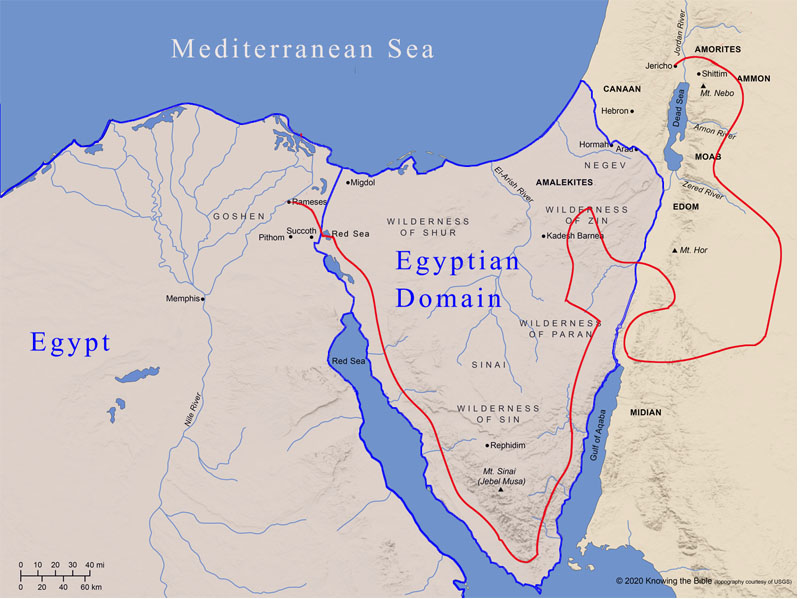
The nations will hear and tremble; God sent his fear before the Israelites. The overthrow of Pharaoh's army was heard throughout the world. The Philistines, Moabites, Edomites, and Canaanites were astonished and surprised, and filled with fear and dread. You will bring them in and plant them on the mountain of Your inheritance— the place, O LORD, You have prepared for Your dwelling, the sanctuary, O Lord, Your hands have established. The LORD will reign forever and ever!" This is the key verse of Exodus that summarizes the message of the entire book of The Book of Exodus. Moses looks ahead to what God will do and describes this glorious future where He will bring His people to His holy habitation. He would plant His people in the mountain of His inheritance, where He would dwell in His sanctuary. For the horses of Pharaoh went with his chariots and his horsemen into the sea, and the LORD brought back the waters of the sea upon them. But the children of Israel went on dry land in the midst of the sea. Moses led the psalm, and gave it out for the men, and then Miriam for the women. The women sang and praised God for assuring Israel's victory over the Egyptians Exodus 15:20 Then Miriam the prophetess, the sister of Aaron, took the timbrel in her hand; and all the women went out after her with timbrels and with dances. And Miriam answered them: "Sing to the LORD, For He has triumphed gloriously! The horse and its rider He has thrown into the sea!" And to this day, the ancient hymn continues to be employed in the synagogue worship of Judaism. Exodus 15:22 So Moses brought Israel from the Red Sea; then they went out into the Wilderness of Shur. And they went three days in the wilderness and found no water. Now when they came to Marah, they could not drink the waters of Marah, for they were bitter. Therefore the name of it was called Marah. Exodus 15:24 So the people grumbled against Moses, saying, "What are we to drink?" And Moses cried out to the LORD, and the LORD showed him a log. And when he cast it into the waters, they were sweetened. God brought the Israelites to a place where the water was bitter. It didn't take them too long before they began to complain once again and doubted the power of the Lord. This is the second time the Israelites complained about Moses. Once again, He showed them His mercy and grace. God told Moses to put the tree into the water. How did Jesus die? On a cross made from a tree. Exodus 15:27 Then they came to Elim, where there were twelve springs of water and seventy palm trees, and they camped there by the waters.
Bible Study Questions 1. What moved Moses and the Israelites to sing a song? a. They sang because the Egyptians were dead 2. In which sea did the army of Egypt get drown? a. Black Sea 3. In their song, the Israelites said that the Egyptians sank to the bottom of the sea like what? a. a fish 4. Which hand did God use to dash the enemy into pieces? a. right 5. How did the enemy die? a. drowned in the sea 6. What musical instrument did Miriam use to lead the women to sing a song. a. tambourine 7. What wilderness did the Israelites pass through after crossing the sea? a. Wilderness of Sin 8. How many days did the Israelites travel without finding water? a. 7 9. Where did the Israelites find water? a. Marah 10. On their journey to the Promised Land, the Israelites found how many wells of water and how many palm trees? a. 12 wells of water and 70 palm trees |
| Cassie, Matt, Mary, Sue | |