Exodus 12 - Passover Instituted
Timeline: 1450 BC
|
Historical Evidence Of The Plagues
Rameses |
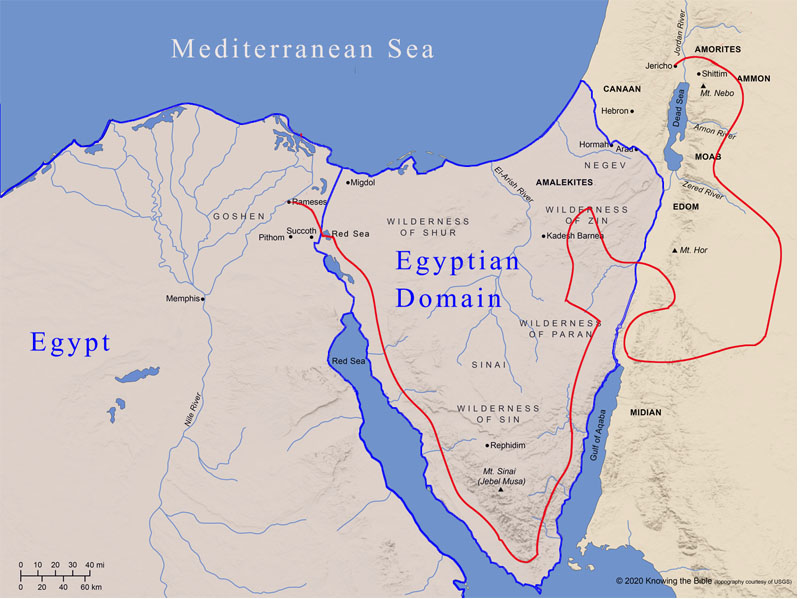
The instructions given by God were very specific. The Passover foreshadowed and prophesied Jesus' crucifixion. The reason Jesus came to Jerusalem that final time wasn't just to celebrate Passover, but to become our Passover. Exodus 12:1 Now the LORD said to Moses and Aaron in the land of Egypt, "This month is the beginning of months for you; it shall be the first month of your year. Until the Exodus, the children of Israel followed the Hebrew calendar coincides with autumn equinox during the time of harvest. It was based on the year of creation. They counted every year since the creation of Adam. Their new year began at sunset in the month Tishri, which is September 15 according to our modern day Gregorian calendar. To the Egyptians, the month of Tishri corresponded to the zodiac sign Libra, the scales in the constellation Libra. The Egyptians believed that during this month, the gods would weigh their actions, good deeds and bad deeds. According to how the scale tipped, the decision their gods made determined who will live, who will die, who will be rich, who will be poor. This plague defied the Egyptian deity. Nisan refers to the first of the twelve months in the Jewish calendar. It has 30 days, and corresponds to March or April on our calendar. On the first day of Nisan, two weeks before the Exodus, God showed Moses the crescent new moon, instructing him to reset the Jewish calendar and sanctify the new month. He shifted their calendar so they would focus on the liberation of the Israelites from slavery and their exodus from Egypt. This was the beginning of the nation of Israel. Exodus 12:3 Tell the whole congregation of Israel that on the tenth day of this month each man must select a lamb for his family, one per household. If the household is too small for a whole lamb, they are to share with the nearest neighbor based on the number of people, and apportion the lamb accordingly. The lamb was to be selected on the tenth day to give the people time to inspect the sacrificial animal. Each household selected a lamb for its own meal to eat together as a family. A household would often consist of three generations—grandparents, parents, and children. The minimum number of people to share a single lamb will be ten people in order to consume an entire lamb at a sitting. Large families would send members of their household to their neighbors who did not meet the requirement. All Jewish families ate the same ritual meal at the same time. Exodus 12:5 Your lamb must be an unblemished year-old male, and you may take it from the sheep or the goats. The smallest deformity, defect or injury made the animal unfit for sacrifice. God specifically stipulated that the Lamb was to be a male, taking the place of the male first-born of Israel. A lamb was considered innocent when it was between eight days old to a full year. If a family could not find a suitable lamb, they could use a goat instead. The lamb was chosen because their innocence is symbolic of Jesus Christ's innocence, and their lack of blemishes pointed toward his perfection. A goat or "scapegoat" refers to any group or individual that innocently bears the blame of others. Exodus 12:6 You must keep it until the fourteenth day of the month, when the whole assembly of the congregation of Israel will slaughter the animals at twilight. The lamb or goat was to be kept for four days giving them time for it to be carefully and thoroughly inspected. The Hebrew words translated as "at twilight" in this verse are "beyn haarbayim", which by definition means "between the two evenings". It is a specific period of time in the 24-hour day that starts with sunset and ends with total darkness. It is the period we generally call "dusk" or twilight. So the Passover lamb was to be killed between sunset and dark as the 14th began. The heads of households represented the priests in this case so they were the ones who actually did the killing. This is the first use of the term "congregation" for the chosen people. This term will be later be used for the New Israel of God's church. Exodus 12:7 They are to take some of the blood and put it on the sides and tops of the doorframes of the houses where they eat the lambs. Some have noted that this placement of blood formed the shape of a cross when connected. Putting the blood on the doorposts was a mark of faith that apparently was not limited to Israelites. Anyone, even an Israelite who failed to apply the blood would have been subject to the same judgment as the Egyptians. Later scripture says that many others left Egypt with the Israelites. Exodus 12:8 They are to eat the meat that night, roasted over the fire, along with unleavened bread and bitter herbs. Do not eat any of the meat raw or cooked in boiling water, but only roasted over the fire—its head and legs and inner parts. Do not leave any of it until morning; before the morning you must burn up any part that is left over. The animal was roasted whole with head and legs still attached so that no bones would be broken. They would have had to cut it up to boil it a pan. Whatever was not eaten was to be burnt up. Unleavened bread was a kind of biscuit, which could be baked rapidly when there was no time to use leaven for their departure was eminent. Symbolically, risen bread puffed up with leaven is reminiscent of sinful pride, and unleavened bread is humble, simple, and pure. The bitter herbs were meant to remind them of their Egyptian bondage, with which their lives were made bitter. The bitterness was to be overpowered by the sweet flesh of the lamb. This reminds them that of God's deliverance.Exodus 12:11 This is how you are to eat it: You must be fully dressed for travel, with your sandals on your feet and your staff in your hand. You are to eat in haste; it is the LORD's Passover. Men would wear a tunic which flowed loosely around the person. When they needed freedom to work, run or fight, they would tuck the hem of the tunic into their belt to gain greater freedom and movement. Sandals were not commonly worn inside the house, and a walking-stick was to be held in one hand ready to move at a moment's notice. God instructed Israel to eat the Passover in an attitude of fear and respect for what God would do in Egypt that night. Exodus 12:12 On that night I will pass through the land of Egypt and strike down every firstborn male, both man and beast, and I will execute judgment against all the gods of Egypt. I am the LORD. Until now the Israelites had escaped the judgment of the plagues without having to do anything. Both the Jews and the Egyptians would be targets. Every first born male human being and animal perished except for those who followed God's commands. Exodus 12:13 The blood on the houses where you are staying will be a sign; when I see the blood, I will pass over you. No plague will fall on you to destroy you when I strike the land of Egypt. When the angel of death saw the blood smeared on the doorposts of the home of an Israelite, the angel would "pass over" the home and spare the first-born there. The blood of the lamb kept those who followed the instructions safe from judgment. Exodus 12:14 And this day will be a memorial for you, and you are to celebrate it as a feast to the LORD, as a permanent statute for the generations to come. A symbolic re-enactment of the Passover is to be held as an annual festival, to remind the people of Israel of their deliverance from bondage. The Passover day may be the origin for the term "day of the Lord" which refers to the period of Tribulation in the last days. Revelation 19:19-21 19 And I saw the beast, the kings of the earth, and their armies, gathered together to make war against Him who sat on the horse and against His army. 20 Then the beast was captured, and with him the false prophet who worked signs in his presence, by which he deceived those who received the mark of the beast and those who worshiped his image. These two were cast alive into the lake of fire burning with brimstone. 21 And the rest were killed with the sword which proceeded from the mouth of Him who sat on the horse. And all the birds were filled with their flesh. Exodus 12:15 For seven days you must eat unleavened bread. On the first day you are to remove the leaven from your houses. Whoever eats anything leavened from the first day through the seventh must be cut off from Israel. Part of the reason Leaven was excluded from bread so that it was quicker to bake, carry and eat. God did not want anyone to be held back because they had to wait for their bread to rise. All leaven (yeast or other agent for causing dough to rise) had to be removed. Whoever eats leavened bread: God was warning the Israelites that He will not tolerate the sins that were commonly committed in Canaan. The word "convocation" implies that the people were called together to teach the Israelites they were a holy people. Exodus 12:17 So you are to keep the Feast of Unleavened Bread, for on this very day I brought your divisions out of the land of Egypt. You must keep this day as a permanent statute for the generations to come. In the first month you are to eat unleavened bread, from the evening of the fourteenth day until the evening of the twenty-first day. For seven days there must be no leaven found in your houses. If anyone eats something leavened, that person, whether a foreigner or native of the land, must be cut off from the congregation of Israel. >You are not to eat anything leavened; eat unleavened bread in all your homes." Passover was the first of God's annual festivals; the Feast of Unleavened Bread was the second. It began on Nisan 15, at twilight, the day after the Passover. This feast began on the Sabbath and lasted seven days until the next Sabbath. This festival memorialized that, because of having to leave Egypt in haste, the Israelites did not have enough time to let their dough be leavened. The number of days of the festival represents perfection and completeness. The Israelites who obeyed and worshiped a Merciful God were set free. Fasting from leaven was to teach the Israelites that they need to purge the influences of the world and then approach God for a fresh start. Exodus 12:21 Then Moses summoned all the elders of Israel and told them, "Go at once and select for yourselves a lamb for each family, and slaughter the Passover lamb. Take a cluster of hyssop, dip it into the blood in the basin, and brush the blood on the top and sides of the doorframe. None of you shall go out the door of his house until morning. Hyssop was used for ritual purposes. It signified that God was marking His people as "pure" and not targets of the judgment God was about to deal out to the Egyptians. Hyssop bunches have aromatic and detergent properties, and can be easily made into a bunch for purposes of sprinkling. The branches are sturdy and could withstand the brushing. The lamb's blood was struck on the door's vertical posts and horizontal beam. It is by the sign of His Passion and Cross that you must be marked today on the forehead, as on the doors. Exodus 12:24 When the LORD passes through to strike down the Egyptians, He will see the blood on the top and sides of the doorframe and will pass over that doorway; so He will not allow the destroyer to enter your houses and strike you down. When your children ask you, 'What does this service mean to you?' you are to reply, 'It is the Passover sacrifice to the LORD, who passed over the houses of the Israelites in Egypt when He struck down the Egyptians and spared our homes.'" Then the people bowed down and worshiped. And the Israelites went and did just what the LORD had commanded Moses and Aaron. Almost every major event in Israel's history is regarded as having occurred on the Passover: Noah's Ark came to rest on Mt. Ararat – Genesis 8 God's covenant given to Abraham – Genesis 17 Abraham was informed of his wife Sarah's future pregnancy - Genesis 18 Passover supper in preparation for the exodus out of Egypt – Exodus 12 Dedication of the tabernacle in the wilderness – Exodus 40 Moses passed away five weeks before Passover – Deuteronomy 34 First Passover in Canaan – Joshua 4:19 The fall of Jericho – Joshua 6 Cleansing of the temple defiled by King Hezekiah – 2 Chronicles 29 Dedication of the 2nd temple occurred – Ezra 7 Belshazzar and the handwriting of the wall – Daniel 5 Palm Sunday was the same day that the lamb for the Passover was chosen - Matthew 21 Jesus ate Passover meal with his disciples on the night before crucified - Matthew 26 Exodus 12:29 Now at midnight the LORD struck down every firstborn male in the land of Egypt, from the firstborn of Pharaoh, who sat on his throne, to the firstborn of the prisoner in the dungeon, as well as all the firstborn among the livestock. During the night Pharaoh got up—he and all his officials and all the Egyptians—and there was loud wailing in Egypt; for there was no house without someone dead. Pharaoh was revered as part god, part human, and the offspring of the gods themselves. Pharaoh was supposed to be untouchable to the plight of common mortals. With the final plague, the God of Israel struck down Pharaoh's most prized possession, his own son—the child-god, part of the Pantheon of "all-powerful" deities. Although the pharaoh of the Exodus was unnamed, some believed that Amenemhet, who was called "the king's eldest son", was the older half-brother of Amenhotep II, who died before he could assume the throne. Therefore it is theorized that Amenhotep II was the Pharaoh at the time of the Exodus. He was not the firstborn son of the previous pharaoh. Therefore he did not die from the tenth plague judgment. Scientists say perhaps, the algal bloom that turned the rivers blood red released mycotoxins, poisonous substances that can cause disease and death in humans. Grain contaminated with these mycotoxins could have been deadly, and could explain the death of the firstborn children. The firstborn might have been the first to pick the grain, and thus would have fallen victim to it first as well. Exodus 12:31 Then Pharaoh summoned Moses and Aaron by night and said, "Get up, leave my people, both you and the Israelites! Go, worship the LORD as you have requested. Take your flocks and herds as well, just as you have said, and depart! And bless me also." Pharaoh was so afraid for his own life that he called for Moses and Aaron that very night. He finally agreed to the terms which were stated before the first plague. Pharaoh asked for blessing that no more plagues would come after they were gone. 33 And in order to send them out of the land quickly, the Egyptians urged the people on. "For otherwise," they said, "we are all going to die!" So the people took their dough before it was leavened, carrying it on their shoulders in kneading bowls wrapped in clothing. Furthermore, the Israelites acted on Moses' word and asked the Egyptians for articles of silver and gold, and for clothing. And the LORD gave the people such favor in the sight of the Egyptians that they granted their request. In this way they plundered the Egyptians. The Egyptians could no longer bear the judgment of the Lord so they sent the Israelites out of their land. God's sons, his first-born, were now released. Since the people were desperate to see Israel leave, they gladly gave the Jews whatever they wanted just to see them leave. The Lord took care that their hard-earned wages should be paid, and the people provided for their journey.Exodus 12:37 The Israelites journeyed from Rameses to Succoth with about 600,000 men on foot, besides women and children. And a mixed multitude also went up with them, along with great droves of livestock, both flocks and herds.
The 600,000 refers to those men from ages twenty to fifty years old who were fit for war. Women and children were not numbered in this verse and neither were the Levites, who were excluded in the count (see Numbers 1). It is estimated that over 2,000,000 Israelites left Egypt. In addition, a mixed multitude, non-Israelites left with them. Some believe they were offspring of mixed marriages while others believe they were Egyptians and others who decided to leave with the Israelites. Both opinions could be true. Exodus 12:39 Since their dough had no leaven, the people baked what they had brought out of Egypt into unleavened loaves. For when they had been driven out of Egypt, they could not delay and had not prepared any provisions for themselves. The Israelites baked unleavened bread, creating a simple, flat bread (matzah) since they had to leave quickly leaving no time for the bread to rise. Symbolically, leaven can represent sin or pride, while unleavened bread signifies purity, humility, and a new beginning in God Exodus 12:40 Now the duration of the Israelites' stay in Egypt was 430 years.At the end of the 430 years, to the very day, all the LORD's divisions went out of the land of Egypt. Because the LORD kept a vigil that night to bring them out of the land of Egypt, this same night is to be a vigil to the LORD, to be observed by all the Israelites for the generations to come. Geographically, Goshen is closely linked with the land and city of Rameses. It was one hundred and thirty miles to Succoth, a seven-day's march. They would have stopped near the Jews' encampment to water their flocks and replenish their own drinking water.Exodus 12:43 And the LORD said to Moses and Aaron, "This is the statute of the Passover: No foreigner is to eat of it. But any slave who has been purchased may eat of it, after you have circumcised him. A temporary resident or hired hand shall not eat the Passover. It must be eaten inside one house. You are not to take any of the meat outside the house, and you may not break any of the bones. The whole congregation of Israel must celebrate it. If a foreigner resides with you and wants to celebrate the LORD's Passover, all the males in the household must be circumcised; then he may come near to celebrate it, and he shall be like a native of the land. But no uncircumcised man may eat of it. The same law shall apply to both the native and the foreigner who resides among you." Surely some Egyptians would be anxious to escape, especially after the calamities which preceded the Exodus. Also, when the Hebrews first came to Egypt, they were accompanied by their own non-Jewish servants. Some strangers may have joined their caravan while they were at Succoth. These regulations needed to be clearly defined in front of the crowd of foreigners that attached themselves to the Israelites. It was a principle of the Jewish law that the slaves should be admitted to complete religious equality with the native Israelites.Exodus 12:50 Then all the Israelites did this—they did just as the LORD had commanded Moses and Aaron. And on that very day the LORD brought the Israelites out of the land of Egypt by their divisions. From here they step into the Sinai Peninsula and leave Egypt. In times to come, all the congregation of Israel must keep the Passover. There are many similarities between Jesus and the Exodus Passover. These are paralleled in verses 12:1-11:
|